How to build your seed round pitch deck
Dec 17, 2025
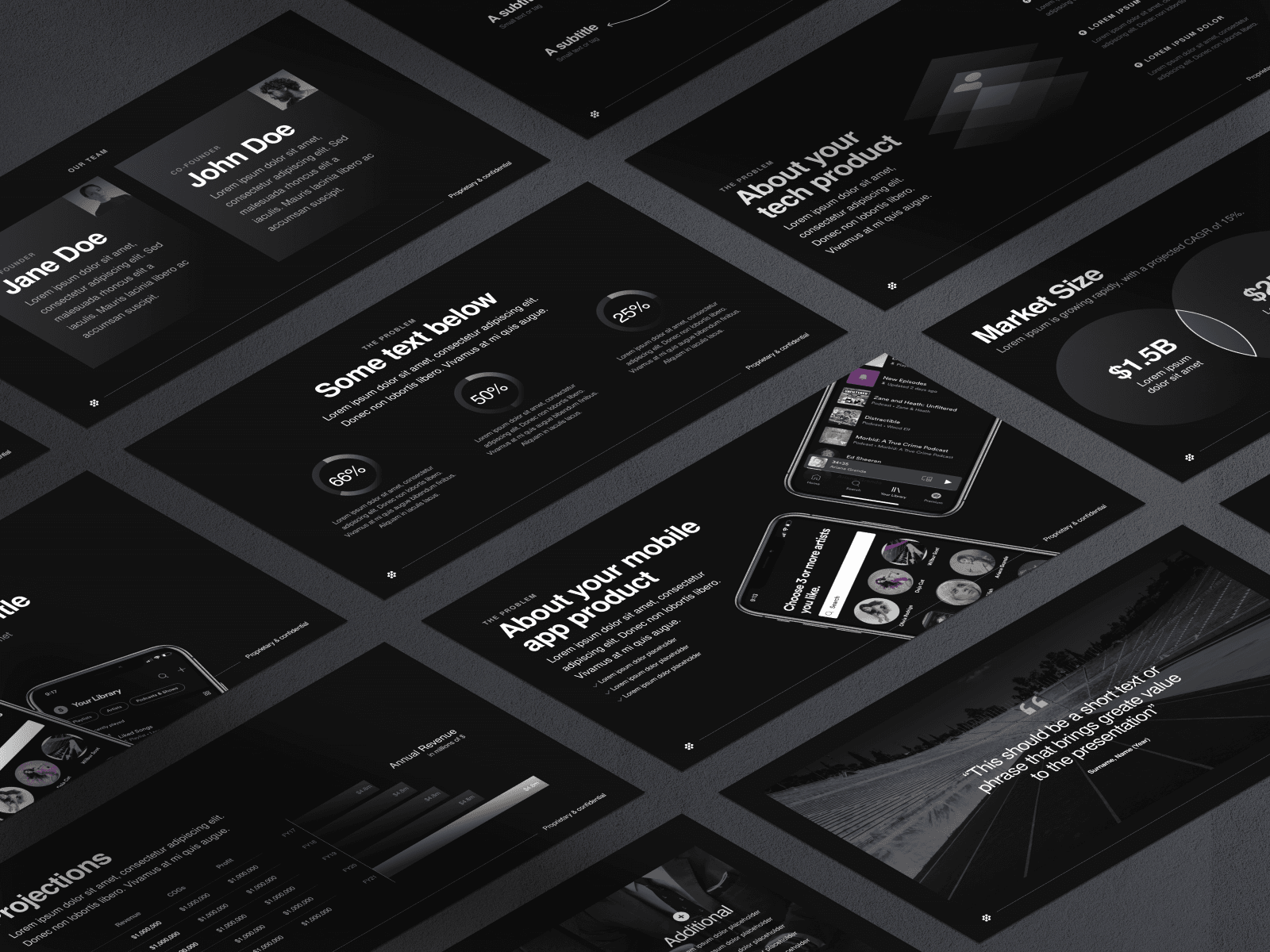
"A winning seed deck is more than a collection of slides — it’s a disciplined narrative framework that enforces radical clarity, strips away complexity, and translates a founder’s raw vision into an irresistible investment opportunity.”
The Philosophy of "Less is More”
Before you open Keynote, PowerPoint, or Figma, stop. The biggest mistake early-stage founders make is confusing the design of a deck with the substance of a pitch. They dive straight into slide layouts, trying to fit every piece of data they possess into a single document.
The result? A dense, unreadable report that looks like a homework assignment rather than a business proposition. To build a seed deck that actually converts, you must adopt a philosophy of radical reduction.
The Narrative First Approach
Most failed pitch decks are just collections of facts. Successful decks are stories.
Your goal is not to prove you have done work; it is to prove you have built a machine that turns capital into growth. Before designing a single pixel, write your pitch as a script or a simple email. If the logic of your business doesn't flow seamlessly in three paragraphs of plain text, no amount of graphic design will save it.
Aaron Harris of Y Combinator sums this up with a singular directive: "Focus on narrative. The rest is commentary."
If you find yourself saying, "I need a slide to explain that point," your story is likely broken. The slides should illustrate the narrative, not carry it.
The "N=1" Constraint
Discipline is measurable. In the YC framework, this discipline is enforced through the "N=1" rule.
Ideally, every major component of your business—the Problem, the Solution, the Team, the Business Model—should require exactly one slide. This isn't just an aesthetic preference; it is a test of your understanding. If you cannot explain your solution in a single slide, you likely do not understand it well enough to sell it.
- The Ideal: 1 Slide per concept.
- The Hard Limit: Never exceed 3 slides for a single concept.
If you find yourself needing four slides to explain "How It Works," you haven't built a product; you've built a maze. Investors view brevity as a proxy for operational focus.
Clarity vs. Cleverness
Founders often suffer from "imposter syndrome" during fundraising. To compensate, they try to look smart by adding complexity, jargon, and nuance. They treat the pitch deck as a thesis defense.
This is fatal. Investors do not read decks; they scan them. On average, an investor spends roughly three minutes reviewing a seed deck. If they have to squint to understand a chart or read a paragraph to grasp the problem, you have already lost them.
Don't try to impress them with your vocabulary or your philosophical view of the market. As Harris notes, "This is not the place for a treatise on your world philosophy." Muddled complexity signals risk. Crystal clear simplicity signals a founder who knows exactly where they are going.
The Core Slides (The "Hook")
Once you have adopted the right mindset, it is time to build the engine of your deck. The first four slides are not merely an introduction; they are the "Hook." In a fast-paced partner meeting or a quick email review, these slides determine whether an investor leans in with interest or checks their watch.
This section validates your product's very existence. If these slides fail to connect, the best financial projections in the world won’t save you.
The Title Slide
The single most common error on a title slide is ambiguity. Founders often treat the title page like a movie poster, using abstract slogans or vague imagery to create "mystery."
In fundraising, mystery is the enemy. Your objective is zero cognitive load.
- Components: Company Name + A One-Line Description.
- The Rule: Tell them exactly what you do immediately. If you are "AirBnB for Storage" or "Stripe for Africa," say it.
If an investor has to flip to slide four to understand that you are a B2B SaaS platform, you have failed the title test. Frame the conversation instantly so the investor knows which mental bucket to place you in.
The Problem (The "Pain")
This is where you establish the stakes. You aren't just identifying a gap in the market; you are identifying a wound.
- Focus on Concrete Impact: Avoid high-level economic theory. Focus on the specific pain felt by real people or businesses. Who is hurting, and how much does it cost them?
- The "Hair on Fire" Test: Y Combinator partners often look for "hair on fire" problems—issues so acute that customers are desperate for a solution. If your problem statement sounds like a mild inconvenience (a "nice-to-have"), the pitch ends here.
Use a relatable anecdote or a stark, undeniable data point to drive this home. You want the investor to nod and think, "Yes, that is clearly broken."
The Solution (The "Product")
If the previous slide was the lock, this slide is the key. It must click perfectly into place.
- Concrete Benefits: Do not list technical features or specs. List the concrete benefits that neutralize the pain described in the previous slide.
- Show, Don't Tell: This is the most critical visual moment in the deck. Use high-fidelity screenshots, product renders, or a GIF of the product in action.
Investors invest in products, not concepts. If you have built something, prove it here. If you are pre-product, show the closest thing you have to reality. The connection between the Problem slide and the Solution slide must be linear and obvious.
Traction (The "Proof")
At the seed stage, data is often scarce, but "traction" is a mindset as much as it is a metric.
- The YC Standard: The ideal visual is a graph that moves "up and to the right." This is the universal language of startup momentum.
- Honesty & Context: Real startup growth is rarely a smooth, perfect exponential curve. It is okay if your numbers are early or if the curve is jagged, provided the underlying trend is positive.
- Meaningful Metrics: Focus on metrics that matter (Revenue, Daily Active Users, Retention) rather than vanity metrics (Total Signups, Cumulative Views).
If there are spikes or dips, add concise context (e.g., "Dip due to seasonal holiday," "Spike due to press launch"). Context turns raw data into a narrative of a founder who understands their own business levers.
The Business Case (The "Money")
You have hooked the investor with a painful problem and a demonstrable solution. Now, the conversation shifts from "Is this a good product?" to "Is this a good business?"
This section is where you demonstrate that your startup is not just a project, but a potential venture-scale giant. You must prove that the mechanics of the business are sound and the ceiling is high enough to matter.
The Unique Insight ("The Magic")
Investors see hundreds of "Uber for X" and "AI for Y" pitches. This slide answers the critical questions: Why you? And why now?
This is often called the "Underlying Magic." It is the differentiating factor that separates you from incumbents and future copycats.
- The Unfair Advantage: Do you possess proprietary technology? Do you have exclusive access to a supply chain? Is there a regulatory shift you are uniquely positioned to exploit?
- The "Why Now": Why wasn't this built five years ago? (e.g., "Smartphones weren't cheap enough yet" or "The API didn't exist").
If your only advantage is "we work harder" or "our design is cleaner," you are vulnerable. You need a structural edge.
Business Model & Market
This is a two-part equation: Unit Economics + Market Size.
1. The Business Model: Keep this radically simple. Complexity here suggests you don't know how you make money.
- Good: "We charge a $10/month subscription."
- Good: "We take a 15% transaction fee."
- Bad: "We have a multi-tiered revenue share with ad-supported freemium add-ons."
2. The Market (TAM): Venture capitalists are in the business of home runs, not singles. They need to see a path to a 100x return.
- Define your Total Addressable Market (TAM) clearly.
- Convince the investor that the pie is massive, and you have a realistic knife to cut a large slice of it.
The Team
At the seed stage, investors are investing in people more than products. However, they are investing in builders, not watchers.
- The Rule: Founders only. Do not include advisors. Listing famous advisors often signals insecurity—that the founders don't feel substantial enough on their own.
- Founder-Market Fit: Don't just list your degrees. Explain why this specific combination of humans is destined to solve this specific problem.
- Example: "Jane built the backend for [Competitor] and John led sales at [Industry Giant]."
Show that you have the technical chops to build it and the business acumen to sell it.
The Ask (Vision)
The final slide is not begging for money; it is an invitation to join a trajectory.
- The Logistics: State clearly how much you are raising and how much runway that buys you (standard is 18 months).
- The Milestone: The purpose of seed money is not to "explore" or "exist." It is to remove risk.
- The Goal: Frame the ask in terms of milestones. "This $2M buys us 18 months to reach $1M ARR, making us Series A ready."
Real-World Examples
Theory is useful, but seeing these principles in action is definitive. The following three companies are now tech giants, but they all started with a deck. By analyzing their early materials, we can see exactly how they applied the rules of clarity, narrative, and focus to secure their futures.
1. Uber (The "Problem/Solution" Masterclass)
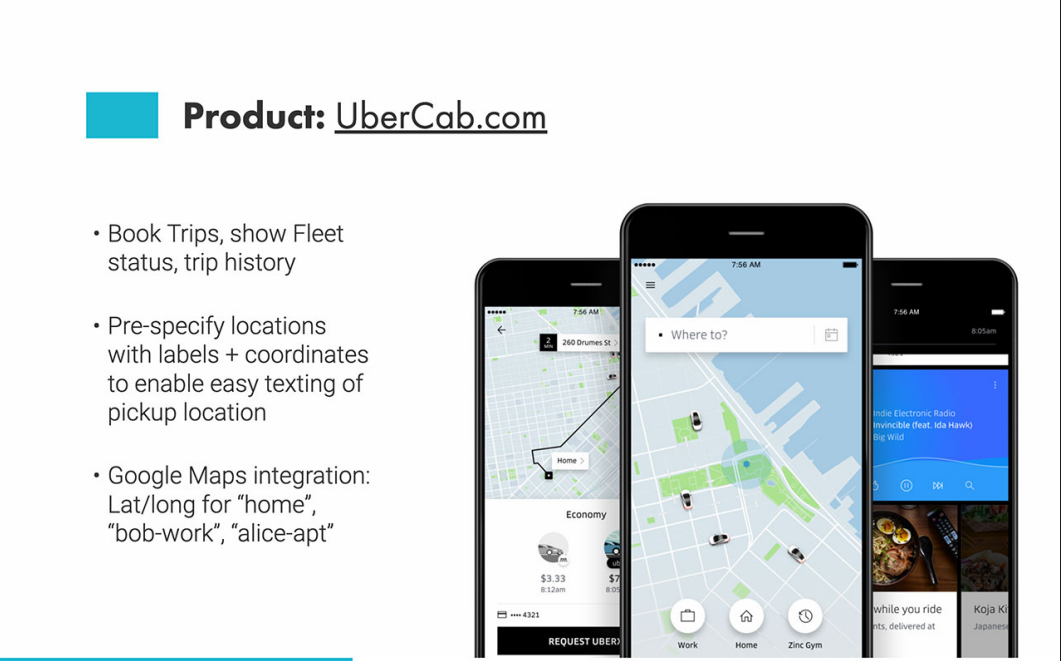
Check the presentation here:
Context: Garrett Camp’s original "UberCab" seed deck is widely circulated not for its beauty, but for its blunt efficiency. It is the definitive example of identifying a "hair on fire" problem.
The Win:
- Problem Clarity: The deck didn't waste time on the history of transportation. It listed simple, relatable pain points that anyone who had ever taken a taxi understood instantly: "Hailing is inefficient," "Unreliable service," and "Unclear pricing." It was visceral.
- Solution Simplicity: The solution wasn't described as a complex logistical dispatch network (though it was). It was described as "1-Click Hailing."
Lesson: You don't need fancy design if your problem/solution fit is visceral and obvious. If the investor nods their head at the problem slide, you are already halfway to the check.
2. Facebook (The "Traction" Masterclass)
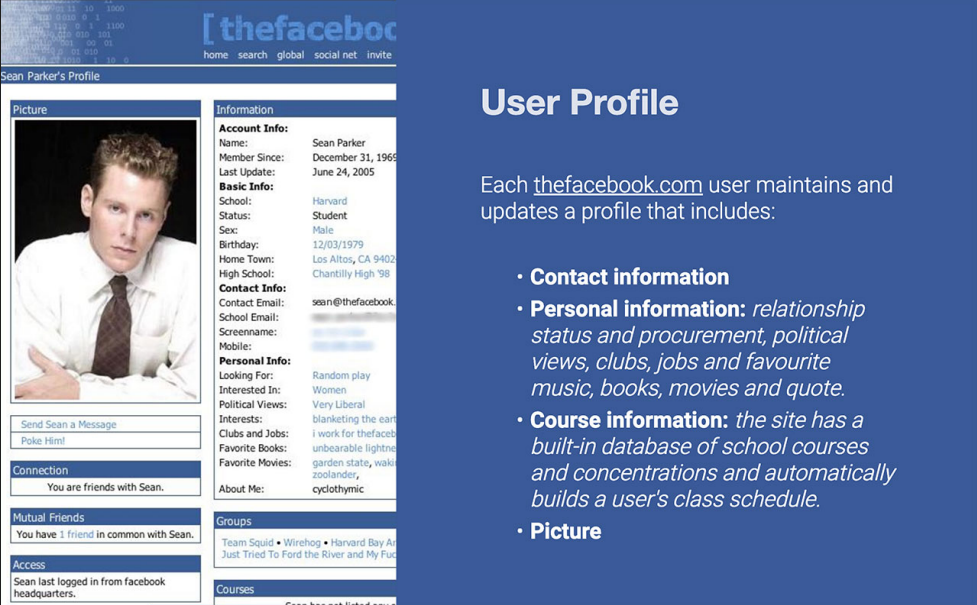
Check the presentation here:
Context: While technically a media kit sent to advertisers in 2004, "Thefacebook's" early deck is a masterclass in letting data tell the story.
The Win:
- Data-Driven: Most startups claim users "love" their product. Facebook proved it. They didn't rely on adjectives; they used retention metrics that were unheard of. The deck highlighted "65% daily active users" and "2.5 million page views."
- Focus: It proved obsession. The narrative wasn't just "we have users," it was "our users are addicted."
Lesson: If you have retention numbers, they are your strongest asset. Put them front and center. Ambition is cheap; engagement is rare. If you have the latter, flaunt it.
3. LinkedIn (The "Network Effect" Masterclass)
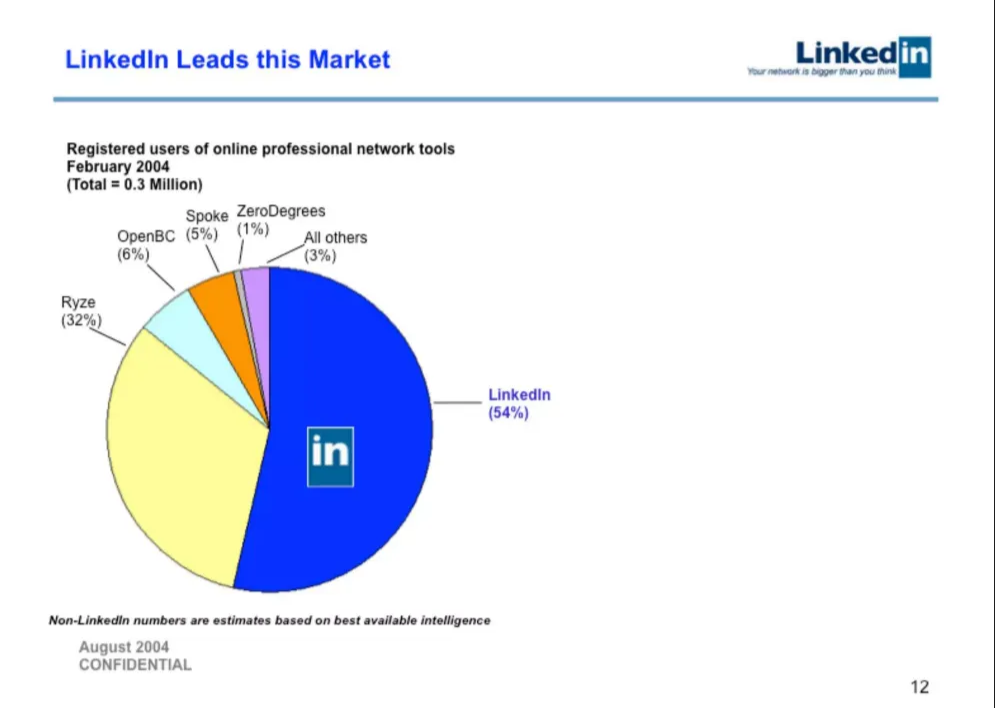
Check the presentation here:
Context: Reid Hoffman’s Series B deck is legendary in Silicon Valley. While technically a later-stage deck, it is frequently cited as required reading for seed founders because of how it handles complex business models.
The Win:
- The Analogy: LinkedIn's value wasn't immediate revenue; it was the network itself. To explain this, Hoffman used a brilliant analogy, comparing "Web 1.0" (Static Listings) to "Web 2.0" (Searchable Networks).
- The Insight: This analogy prioritized the value of the network over immediate cash flow. It taught investors how to value the company—not by its current bank account, but by the density of its connections.
Lesson: If your business model is complex (like a marketplace or network effect), you must educate the investor. Use analogies to explain why they should value your long-term asset over short-term revenue.
Conclusion
Building a winning seed deck isn’t about stacking more slides or hiring expensive designers; it’s about crafting a disciplined narrative that enforces clarity, validates demand, and turns a raw vision into an investable reality. Whether you follow the Y Combinator template, study the Uber example, or emulate Reid Hoffman’s logic, the most successful pitches share the same DNA: radical simplicity, honest traction, and a clear path from "problem" to "profit."
When you strip away the fluff to focus on the "hair on fire" problem, prove your solution with meaningful metrics, and demonstrate a team capable of high-velocity execution, your deck stops being a document and becomes a catalyst for partnership. That shift from "explaining a product" to "selling a business" is what separates founders who struggle to raise from those who spark bidding wars.
If you want to accelerate that shift, consider Convincio. Their AI-powered pitch and sales coaching platform evaluates delivery, highlights targeted opportunities for improvement, and helps teams practice in realistic, adaptive scenarios so your reps show up to every conversation confident, clear, and conversion-ready.
Explore how Convincio can elevate your sales communication and accelerate your growth: book a demo with Convinco.