How AI Sales Coaching Scales Across Remote and Hybrid Teams
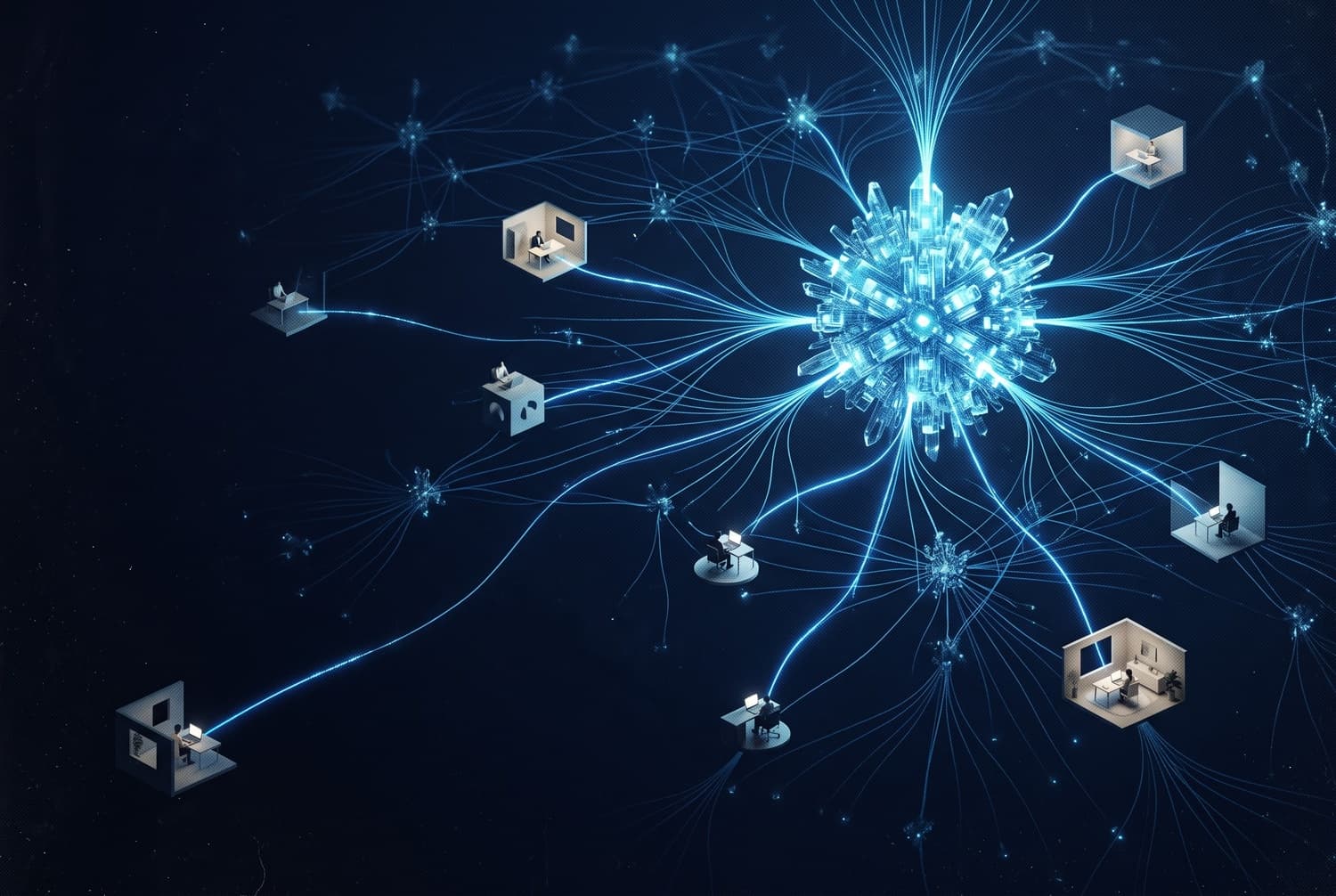
The remote sales team introduced a specific coaching problem that most sales organisations have not fully solved. In an office environment, coaching happened through proximity - a manager could overhear a call, tap a rep on the shoulder between dials, join a live conversation without a scheduling conversation, and provide immediate feedback in the thirty seconds after a call ended. These informal coaching moments were not logged, were not systematic, and were not scalable - but they were frequent, and their frequency produced a kind of ambient coaching culture that distributed teams lost when they went remote and have not recovered.
The formal substitutes for ambient coaching - weekly one-on-ones, periodic call shadowing on video, recorded call review - are less frequent, less immediate, and more logistically demanding than the informal coaching they replaced. The result is that remote sales teams receive less coaching per rep per week than office teams did, and the gap is largest for the reps who need it most - new hires who cannot absorb culture through proximity, mid-tenure reps who are making the same errors repeatedly without someone nearby to catch and correct them, and high-potential reps who would develop faster with more frequent developmental feedback.
What Remote Teams Lose and What AI Recovers
The coaching losses in a remote environment fall into three categories. The first is immediacy: feedback that arrives in the thirty seconds after a call ends is different from feedback that arrives in a one-on-one three days later, and the difference in behavior change impact is substantial. The second is coverage: a manager in an office who overhears fragments of ten calls in a day has a richer picture of their team’s call quality than a remote manager who listens to three recordings a week, selected from a queue of hundreds. The third is accessibility: a new rep in an office can turn around and ask a question between calls without scheduling a meeting. A new rep working remotely has to decide the question is important enough to message about and wait for the response.
Real-time AI coaching recovers all three of these losses without requiring the manager to be present. Immediacy is recovered because the feedback arrives during the call, not after it. Coverage is recovered because every call is monitored and produces structured output, not just the three a week the manager had time to review. Accessibility is recovered because the rep does not need to ask a question - the answer surfaces in their panel when the relevant moment arises.
Shadow Mode for Remote Managers
Convinco’s Shadow Mode gives remote managers a form of presence on their team’s calls that does not require joining them. The manager configures the coaching priorities for each rep -which MEDDPICC elements to focus on, which objection types to track, what talk time threshold to flag - and the system implements those priorities on every call the rep makes. After each call, the manager receives a structured coaching brief that shows how the call went against those priorities: which elements were covered, which were missed, where the rep deviated from the recommended response.
The practical effect for a remote manager overseeing eight reps is that they have a structured, evidence-based picture of every call their team makes without being on any of them. Their one-on-ones shift from reconstructing what happened to discussing what the patterns mean and what to work on next. Their coaching is more specific because it is based on complete data rather than on the selective sample that recording review provides. And their reps feel more coached - not because the manager has more time for them, but because the AI coaching layer is present on every call in a way that a remote manager physically cannot be.
Consistency Across Time Zones
Multi-geography sales teams have an additional coaching equity problem: reps in different time zones receive coaching at different quality levels depending on the manager’s location and working hours. A rep in Singapore who makes calls while their US-based manager is asleep receives no real-time support and delayed post-call feedback that arrives in the context of a new working day rather than in the immediate aftermath of the call it references. A rep in London whose manager is in New York has a four-to-five-hour overlap window that limits when live coaching can happen.
An AI coaching system does not have a time zone. It operates identically whether the call happens at nine in the morning in the manager’s city or at two in the morning. The Singapore rep making calls in their afternoon receives the same real-time guidance as the New York rep making calls at the same moment. The post-call scorecard arrives in the manager’s inbox regardless of when the call happened. Coaching equity across time zones is not a management philosophy aspiration - it is a system property that follows from the AI’s availability.
Async Coaching Workflows for Distributed Teams
The coaching conversation in a remote team does not have to be synchronous to be effective, but it does have to be specific. A coaching message that says great call overall, just try to close a bit earlier is synchronous or asynchronous - it does not matter, because it is vague enough to be ineffective in either format. A coaching message that says in your call on Tuesday with the procurement lead, you had a clear buying signal at minute fourteen when they asked about the implementation timeline, and you answered it without deepening the commitment - here is what that question usually signals and here is how to follow it up - is specific enough to be useful whether it arrives in a real-time conversation or in an async message the rep reads between calls.
Convinco’s coaching briefs are designed to support exactly this kind of async specificity. The manager reads the brief, identifies the one or two moments they want to address, and sends a specific coaching message tied to the verbatim evidence from the call. The rep receives it, watches the fifteen-second clip if needed, and understands exactly what the feedback is about. No meeting required, no reconstruction from memory, no vague impression of a call that happened three days ago.
The remote sales team does not have a coaching problem that requires everyone to return to the office. It has a coaching infrastructure problem that requires a system designed for distributed work - one that provides real-time support without physical presence and produces structured evidence without scheduled observation.
See how Convinco’s real-time AI copilot delivers live coaching the moment it matters - closing the gap traditional training cannot reach. Book a demo: https://tally.so/r/eqYkZk View pricing: convinco.co/pricing Download the assistant: https://www.convinco.co/download Ventairy case study: convinco.co/blog/ventairy-case-study
Further Reading
- How Cornerr Cut New SDR Ramp From Five Weeks to Twelve Days
- Roleplay in Sales: Why Your Team Hates It (And How AI Fixes It)
- 7 Most Common Sales Objections (and How AI Can Help You Overcome Them)
- Convinco vs Gong: Which Revenue Intelligence Tool Do You Need?
- How Convinco Helps You Hit Every MEDDPICC Qualifying Question Live
- The 5-Minute Pre-Call Routine: How Top SDRs Prep for Discovery
- Best Al Sales Assistants in 2026: A Buyer’s Guide by Use Case (Cold Calling, Live Coaching, CRM, Email)